Transform Your Smile with Confidence
Rediscover the Smile You Love
A smile can say so much without speaking a single word.
Sometimes, a person avoids photographs because of chipped or discolored teeth. Sometimes, they cover their mouth while laughing. Sometimes, they simply wish their teeth looked more harmonious and attractive.

Dental veneers and laminates can help transform the appearance of selected teeth and give you a smile that feels more natural, balanced and confident.
At Dr. Bharat Katarmal Dental & Implant Clinic, Jamnagar, veneers and laminates are planned as part of a personalized smile design—not simply as cosmetic coverings for teeth.
Because a beautiful smile is not only about how others see you. It is also about how you feel when you see yourself smile.
What Are Dental Veneers and Laminates?
Dental veneers, commonly called dental laminates, are thin, tooth-colored coverings that are bonded to the visible front surface of teeth to improve their appearance.
Depending on the individual case, veneers may be used to improve:
✔ Tooth color
✔ Tooth shape
✔ Minor chips and fractures
✔ Small gaps between teeth
✔ Slightly uneven-looking teeth
✔ Worn or irregular tooth edges
✔ Proportion and symmetry of visible teeth
✔ Overall smile aesthetics
Veneers are designed specifically for the individual rather than being a one-size-fits-all cosmetic treatment.
Dental Veneers in Jamnagar: More Than Just Cosmetic Dentistry
A smile makeover is often about more than teeth.
It may be about the person who has stopped smiling freely in photographs.
It may be about someone who feels uncomfortable meeting people because of the appearance of their front teeth.
It may be about finally being able to laugh without instinctively covering the mouth.
And sometimes, it is simply about looking in the mirror and thinking:
“I like my smile.”
That emotional improvement is one of the reasons cosmetic dentistry can be meaningful for many patients.
Why Is Your Smile So Important?
Have you ever noticed how quickly you notice someone's smile?
A genuine smile can make a person appear warmer, more approachable and more confident. It can influence first impressions, photographs, social interactions and even the way we feel about ourselves.
There is a popular saying:
“A smile is the universal welcome.”
Your smile is a part of your identity.
If you are unhappy with your smile because of the appearance of your front teeth, modern cosmetic dentistry may offer several options—including veneers, laminates, tooth bonding, orthodontics and teeth whitening.
The goal is not to create somebody else's smile. The goal is to create a smile that suits you.
Who May Be a Candidate for Dental Veneers?
Veneers may be considered for adults who have healthy teeth and gums but are unhappy with the appearance of selected teeth.
They may be suitable for patients with:
Discolored or Stained Teeth
Certain types of tooth discoloration may not respond adequately to conventional teeth whitening. In selected cases, veneers may provide an alternative cosmetic solution.
Chipped Teeth
Small chips or irregularities in the visible front teeth can sometimes be improved with veneers or other minimally invasive cosmetic procedures.
Uneven Tooth Shape
Teeth that appear too short, narrow, irregular or disproportionate may sometimes be reshaped visually with carefully designed veneers.
Small Gaps Between Teeth
For selected cases, veneers can help reduce the appearance of small spaces between front teeth.
Minor Cosmetic Irregularities
Veneers can sometimes improve the visual harmony of teeth when minor shape, size or alignment concerns are present.
However, veneers are not appropriate for everyone. A detailed dental examination is essential before deciding whether veneers are the right treatment.
Porcelain Veneers vs Dental Laminates
The terms “veneers” and “laminates” are often used interchangeably in cosmetic dentistry.
A veneer is essentially a thin cosmetic restoration placed over the front surface of a tooth. Depending on the material and technique used, dentists may refer to them as porcelain veneers, ceramic veneers or dental laminates.
The most appropriate material depends on factors such as:
✔ Tooth condition
✔ Desired appearance
✔ Bite
✔ Tooth position
✔ Amount of available tooth structure
✔ Smile design
✔ Functional requirements
✔ Patient expectations
What Materials Are Used for Dental Veneers?
Different materials can be used for aesthetic tooth restorations.
Porcelain / Ceramic Veneers - Lithium Disilicate - E-max
Porcelain or high-quality ceramic veneers are popular because they can provide excellent aesthetic results and can be designed to mimic important characteristics of natural teeth.
They may offer:
✔ Natural-looking translucency
✔ Tooth-like color
✔ Smooth surface
✔ Good aesthetic stability
✔ Customized shape and proportions
Composite Veneers
Composite resin can also be used to improve the appearance of teeth in selected situations.
Composite bonding may have advantages such as:
✔ Conservative treatment
✔ Often fewer appointments
✔ Ability to repair or modify relatively easily
✔ Potentially lower cost than laboratory-made ceramic veneers
However, the choice between composite bonding and ceramic veneers should be based on the individual clinical situation rather than price alone.
How Are Dental Veneers Done?
The exact procedure varies according to the type of veneer and the patient's teeth.
A typical cosmetic veneer treatment may involve the following stages:
1. Smile Evaluation
Your teeth, gums, bite, facial appearance and smile are assessed.
2. Understanding Your Expectations
Your concerns are discussed carefully.
Do you want a subtle improvement?
Do you want a brighter smile?
Do you want to change tooth shape?
Do you want your smile to appear more symmetrical?
These details are important for smile design.
3. Smile Design
The proposed tooth shape, proportions, color and overall smile harmony are considered before the final restorations are made.
4. Trial Smile - Test Drive
Where appropriate, a trial smile - Test Drive are given which help evaluate the proposed shape and appearance before final fabrication.
5. Tooth Preparation
Depending on the veneer system and individual case, minimal tooth preparation may be required. In some selected cases, little or no preparation may be possible.
“No-prep” or “minimal-prep” veneers are not automatically suitable for every patient.
6. Digital Scanning
The teeth may be digitally scanned with intraoral scanner so that the veneers can be designed accurately.
7. Temporary Veneers
Provisional veneers restoration may help evaluate the proposed shape and appearance before final fabrication and protect prepared tooth.
8. Fabrication of Veneers
The definitive veneers are fabricated according to the approved treatment plan at dental laboratory.
9. Try-In and Evaluation
The veneers are evaluated for:
✔ Shape
✔ Color
✔ Size
✔ Proportion
✔ Smile harmony
✔ Bite
✔ Patient satisfaction
✔ Proportion
✔ Smile harmony
✔ Bite
✔ Patient satisfaction
10. Bonding
Once the veneers are approved and the teeth are appropriately prepared, the veneers are bonded to the teeth using dental adhesive techniques.
Smile Design Before Veneers
Beautiful veneers begin with good planning.
A veneer should not simply be made “white” or “straight.”
It should be designed according to the individual's:
✔ Facial features
✔ Lip line
✔ Smile line
✔ Tooth proportions
✔ Gum appearance
✔ Existing teeth
✔ Bite
✔ Age and personality
✔ Desired level of brightness
✔ Gum appearance
✔ Existing teeth
✔ Bite
✔ Age and personality
✔ Desired level of brightness
The objective is to create a smile that looks beautiful without looking artificial.
What Can Dental Veneers Change?
Veneers can potentially improve the appearance of:
However, veneers cannot correct every dental problem.
For example, significant tooth misalignment may require orthodontic treatment or clear aligners. Active gum disease, untreated decay or significant bite problems may need to be addressed before cosmetic treatment.
Are Veneers Permanent?
Dental veneers are considered long-term cosmetic restorations, but they are not necessarily permanent for life.
Their longevity depends on several factors, including:
✔ Oral hygiene
✔ Bite forces
✔ Bruxism or teeth grinding
✔ Diet and habits
✔ Quality of bonding
✔ Material used
✔ Tooth condition
✔ Regular dental check-ups
A veneer can also become damaged or debonded and may eventually require repair or replacement.
Good planning and appropriate case selection are therefore as important as the veneer material itself.
Are Dental Veneers Safe?
When appropriately planned and placed on suitable teeth, dental veneers can be a safe cosmetic treatment.
However, veneers involve irreversible changes in some cases because tooth enamel may need to be removed during preparation.
Therefore, veneers should not be considered simply because they are fashionable or popular.
A responsible cosmetic dentist should first determine whether you actually need veneers—and whether a more conservative treatment could achieve the desired result.
Veneers vs Teeth Whitening
These treatments solve different problems.
Teeth Whitening
Whitening primarily addresses tooth colour and is most suitable when the tooth structure and shape are otherwise satisfactory.
Veneers
Veneers can address more than color. They may change the visible shape, size, proportion and appearance of selected teeth.
If your only concern is tooth color, professional teeth whitening may be a more conservative option than veneers.
Veneers vs Composite Bonding
Composite bonding can be an excellent conservative option for selected cosmetic concerns.
Veneers may be considered when a patient wants a more extensive or laboratory-fabricated aesthetic transformation.
The right choice depends on:
Your teeth + Your expectations + Your bite + Your smile + Your long-term goals
There is no single cosmetic treatment that is best for everyone.
When Are Dental Veneers NOT Recommended?
Veneers may not be appropriate when there is:
✔ Active tooth decay
✔ Untreated gum disease
✔ Poor oral hygiene
✔ Severe tooth wear
✔ Significant enamel loss
✔ Severe malocclusion
✔ Severe bruxism without adequate management
✔ Insufficient tooth structure
✔ Unrealistic cosmetic expectations
In such situations, other dental treatments may need to be considered first.
How Many Veneers Do You Need?
There is no fixed number.
Some patients may need a veneer on one tooth to improve a localized cosmetic problem.
Others may benefit from veneers on several visible front teeth to create a more harmonious smile.
The number depends on:
✔ Existing tooth color
✔ Tooth shape
✔ Smile symmetry
✔ Desired result
✔ Facial proportions
✔ Bite and functional considerations
The goal is not to place as many veneers as possible. The goal is to achieve the desired improvement with appropriate treatment.
What Does the Dental Veneer Procedure Cost in Jamnagar?
The cost of dental veneers varies from patient to patient.
Factors that influence the cost include:
✔ Number of veneers
✔ Type of material
✔ Ceramic or composite technique
✔ Laboratory involved
✔ Complexity of smile design
✔ Amount of tooth preparation
✔ Additional dental treatment required
✔ Quality and characteristics of the selected material
Therefore, an accurate quotation can only be provided after evaluating your teeth and discussing your treatment plan.
Choosing veneers purely on the basis of the lowest price may not be the best approach for a treatment involving your visible front teeth.
Why Choose Dr. Bharat Katarmal Dental & Implant Clinic for Veneers in Jamnagar?
At Dr. Bharat Katarmal Dental & Implant Clinic, cosmetic dentistry is approached as a combination of dental science, precision and smile design.
Dr. Bharat Katarmal has more than 25 years of clinical experience and provides comprehensive dental care in Jamnagar.
For cosmetic smile treatment, attention is given to:
✔ Detailed smile evaluation
✔ Individualized treatment planning
✔ Tooth and gum health
✔ Facial and smile proportions
✔ Conservative treatment wherever appropriate
✔ Appropriate selection of restorative material
✔ Functional as well as aesthetic considerations
✔ Natural-looking results
We Do Not Believe in “One Smile Fits All”
Your smile should not look like a template.
A beautiful smile should complement your face, your personality and your natural appearance.
That is why smile design should begin with understanding the person behind the smile.
Your Smile Deserves a Personal Design
Imagine looking at an old photograph and remembering how carefully you tried not to smile.
Now imagine taking a photograph without thinking about your teeth.
Imagine laughing with friends without covering your mouth.
Imagine meeting someone new and simply smiling—without hesitation.
That is the emotional side of cosmetic dentistry.
Veneers cannot change your personality, your life or who you are.
But if you have been hiding your smile because of the appearance of your teeth, an appropriately planned smile makeover may help you feel more comfortable expressing yourself.
Frequently Asked Questions About Dental Veneers & Laminates
1. Are dental veneers and laminates the same thing?
The terms are commonly used interchangeably. Both generally refer to thin cosmetic restorations placed on the visible surface of teeth. The exact material and technique may vary.
2. Do dental veneers look natural?
Yes. Properly designed ceramic or porcelain veneers can be made to mimic important characteristics of natural teeth, including color, shape and translucency. Natural-looking results depend heavily on planning, material selection and execution.
3. Are veneers painful?
Veneer treatment is generally performed with appropriate local anesthesia when necessary. The amount of tooth preparation varies considerably between cases, so the experience can differ from patient to patient.
4. Can veneers fix crooked teeth?
5. Can veneers close gaps between teeth?
Yes, selected small gaps can sometimes be reduced visually with veneers. However, the cause and size of the gap should be evaluated before treatment.
6. Can veneers whiten yellow teeth?
Veneers can change the visible color of the treated teeth. However, if tooth color is the only concern, teeth whitening may be a more conservative option.
7. Can I get veneers on only one tooth?
Yes. A single veneer may be appropriate when one tooth has a localized cosmetic problem. Matching a single veneer to neighbouring natural teeth requires careful color and shape planning.
8. How long do dental veneers last?
Veneers can provide long-term service, but they are not guaranteed to last forever. Longevity depends on material, bonding, tooth condition, bite, oral hygiene and habits.
9. Can I eat normally after getting veneers?
After the bonding procedure and any recommended initial precautions, most patients can eat normally. However, very hard objects and damaging habits should be avoided.
10. Can veneers fall off?
A veneer can occasionally debond or fracture. The risk depends on factors such as bonding, tooth preparation, bite, material and habits such as teeth grinding.
11. Are no-prep veneers better?
Not necessarily. No-prep veneers can be appropriate in selected cases, but they are not suitable for every tooth or smile. The treatment should be based on anatomy and the desired result rather than marketing terminology.
12. Can people tell that I have veneers?
Well-designed veneers should ideally look harmonious with your face and smile rather than obviously appearing artificial. The final appearance depends on tooth proportions, color, translucency, surface texture and smile design.
13. What is better: veneers or crowns?
They are different treatments. Veneers primarily improve the visible front surface of selected teeth, while crowns cover a much greater portion of a tooth and are generally used when more extensive restoration is required.
14. Should I get teeth whitening before veneers?
In many cases, the desired final tooth shade should be decided before fabricating veneers. If whitening is planned, it may be preferable to complete it before final veneer color selection.
15. Are veneers suitable for everyone?
No. Healthy teeth and gums, adequate tooth structure, suitable bite conditions and realistic expectations are important considerations. A dental examination is necessary before treatment.
Science-Backed Information About Dental Veneers
Dental veneers are thin tooth-colored restorations bonded to the front surface of teeth to improve their appearance. Modern ceramic veneers can provide highly aesthetic results because dental ceramics can reproduce important optical characteristics of natural enamel, such as translucency, color and surface texture. However, veneers are not simply a cosmetic “cover”; successful treatment depends on proper diagnosis, healthy teeth and gums, appropriate case selection, conservative tooth preparation, accurate bonding and careful control of the bite. Scientific evidence supports the use of veneers for selected aesthetic problems such as discoloration, minor changes in tooth shape and size, and certain small spaces or defects. Their long-term performance depends on factors including the ceramic material, bonding technique, remaining tooth structure, oral hygiene, parafunctional habits such as tooth grinding and regular dental care. Importantly, veneers may involve irreversible removal of some tooth structure in certain cases, so they should be recommended only when the expected aesthetic benefit justifies the treatment. A thorough dental and smile evaluation is therefore essential before deciding whether veneers or a more conservative alternative—such as professional whitening or composite bonding—is appropriate.
The science of veneers is not just about making teeth look beautiful; it is about preserving healthy tooth structure, achieving a functional bite and creating an aesthetic result that can remain stable for many years with proper care.
Mouthhealthy - Veneers : https://www.mouthhealthy.org/all-topics-a-z/veneers
National Library of Medicine: The Success of Dental Veneers According To Preparation Design and Material Type: https://pmc.ncbi.nlm.nih.gov/articles/PMC6311473/
Real cases of Veneers done at Jamnagar

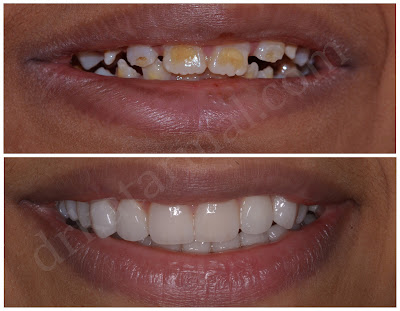

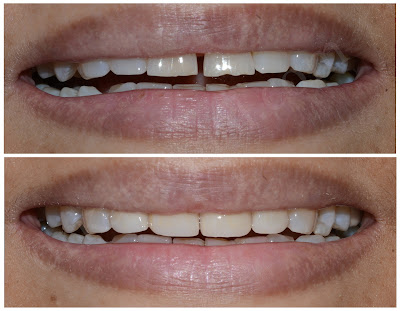

Ultimate Smile Designer in Jamnagar

As an Ultimate Smile Designer, Dr. Bharat Katarmal brings a specialized aesthetic approach to Smile Design, combining dental knowledge, facial aesthetics and attention to detail to create smiles that are harmonious with each patient's individual appearance. Smile Design is not simply about making teeth whiter or more uniform—it involves carefully considering tooth shape, size, proportion, color, alignment, gum contours, smile line and facial features to develop a personalized smile. The aim is to create a natural-looking, balanced and confident smile that complements your face and personality rather than following a one-size-fits-all concept.
Ready to Rediscover Your Smile?
Perhaps you have spent years smiling less than you wanted to.
Perhaps you avoid certain photographs.
Perhaps you have always wondered what your smile could look like if your front teeth were more harmonious.
You don't have to decide on veneers just because you are unhappy with your smile.
Start with a professional smile evaluation.
We can discuss your concerns, examine your teeth and explain whether veneers, laminates, bonding, whitening, orthodontics or another treatment would be most appropriate for you.
Your smile is uniquely yours.
Let your treatment be uniquely yours too.
Book a Smile Design Consultation at Dr. Bharat Katarmal Dental & Implant Clinic, Jamnagar.


